Bacopa, Ginkgo and L-Theanine for Memory and Focus: What the Research Really Shows
Quick Answer: Do Nootropic Botanicals Help Memory and Focus?
Some do, modestly, for the right person and over the right timescale. Bacopa monnieri has the strongest human data for memory, but only after 8–12 weeks of daily use, and the pooled analysis found its clearest effect on attention speed rather than recall. L-theanine has solid evidence for calm, non-jittery focus and can feel more immediate. Phosphatidylserine has reasonable support for age-related memory. Ginkgo biloba, rhodiola and lion's mane are far more mixed — promising in places, neutral or thin in others. None of these treats a cognitive disorder, and a finished multi-ingredient product is not the same as any single studied dose.
- Strongest finding: standardised Bacopa improves memory after ~8–12 weeks.
- Most immediate: L-theanine for calm focus, especially alongside caffeine.
- Key caveat: support in healthy people, not a treatment — see a clinician for real symptoms.

Bacopa monnieri: the one with real memory data
If any ingredient in this category has earned its reputation, it is Bacopa monnieri. Used in Ayurvedic tradition for memory, it has since been put through a series of randomised, placebo-controlled trials in humans. The compounds thought to matter are the bacosides, and standardised extracts are the ones the research actually used. A frequently cited 2014 meta-analysis in the Journal of Ethnopharmacology pooled nine randomised, placebo-controlled trials in 518 people and found faster Trail-Making B times and quicker choice reaction times — an effect on the speed of attention rather than a dramatic jump in raw recall. Its authors were careful about that distinction, and so are we.
The memory-specific evidence sits in the individual trials rather than in that pooled analysis. A randomised, placebo-controlled trial in 98 healthy Australians over 55 gave 300 mg a day of a standardised extract for twelve weeks and found significant improvements in verbal learning, memory acquisition and delayed recall on the Rey Auditory Verbal Learning Test — while the complex-figure and trail-making scores moved but not significantly. An earlier double-blind trial in healthy adults published in Psychopharmacology reported improved speed of visual information processing, learning rate and memory consolidation, with the maximal effect appearing at week twelve rather than week five. Two useful things follow: the effect is real but narrow, and it is genuinely slow.
Mechanistically, the bacosides are thought to act on dendritic branching and on antioxidant activity in the hippocampus, which is a plausible story for why an effect would accumulate over weeks rather than hours. That mechanism comes largely from animal work, so treat it as an explanation for the timescale, not as a second piece of human evidence.
The catch — and it is the single most important thing to understand about this ingredient — is time. The memory effect shows up after roughly 8 to 12 weeks of consistent daily use, not after a dose or two. Anyone selling Bacopa as an instant "smart pill" is misrepresenting how it behaves. It also works better taken with food, which reduces the mild digestive upset some people notice — the Australian trial above recorded more frequent stools, abdominal cramps and nausea in the Bacopa group than in the placebo group, and that is the most common reason people abandon it in week two.
L-theanine: the fast, calm one
L-theanine is an amino acid found in tea, and it is one of the few ingredients here that can feel relatively quick. Its best-supported use is calm, sustained attention — it takes the jittery edge off caffeine and is associated in studies with a more relaxed but alert state. It is not a stimulant and does not force focus; it smooths it.
The detail matters here, because the trials are more specific than the marketing. A randomised crossover study in Biological Psychology tested 250 mg of L-theanine and 150 mg of caffeine alone and together. On its own, L-theanine did not improve attention — it slightly worsened serial subtraction and nudged headache ratings up. The combination is what produced faster simple reaction times, better rapid visual information processing accuracy and lower self-reported mental fatigue. Separately, a small EEG study reported in the Asia Pacific Journal of Clinical Nutrition found that a dietary-level 50 mg dose increased alpha-band activity, the electrical signature of relaxed alertness, within about an hour.
Read together, those results say something narrower than "L-theanine improves focus": it appears to change the quality of caffeinated attention, taking the edge off without removing the lift. That is still a useful property, and it is the one honest reason to want L-theanine in a formula. If you want the beginner-level framing of fast-acting versus slow-acting ingredients before you start comparing labels, our plain-English guide to what nootropics are and how they differ sets out the categories.
Phosphatidylserine: the underrated membrane nutrient
Phosphatidylserine is a phospholipid and a natural component of brain-cell membranes. It has reasonable human evidence for supporting memory, particularly the kind of age-related memory complaints that come with getting older. It is less famous than Bacopa or ginkgo, but it is a common inclusion in more serious nootropic formulas precisely because the data is respectable.
The most quotable human trial is a six-month randomised study of soybean-derived phosphatidylserine in 78 older Japanese adults with memory complaints. Its headline result is more qualified than the supplement industry usually admits: test scores rose in every arm including placebo, and the significant gains for phosphatidylserine appeared in the subgroup who started with the lowest baseline scores, mostly on delayed verbal recall. No adverse effects were recorded. That is a genuine signal in the people with the most room to improve, not a general memory upgrade. Phosphatidylserine is also the ingredient several mainstream shelf brands are built on — our look at what the coffee-fruit and phosphatidylserine pairing in Neuriva proves follows that same evidence trail to its end.
Ginkgo, rhodiola and lion's mane: promising but mixed
Ginkgo biloba is the ingredient whose reputation runs ahead of its evidence. It is traditionally used to support cerebral blood flow, and some trials are positive — but the large, well-designed studies were essentially neutral. The Ginkgo Evaluation of Memory trial in JAMA randomised 3,069 adults aged 75 and over to 120 mg of ginkgo extract twice daily or placebo and followed them for a median of six years; dementia rates were, if anything, marginally higher in the ginkgo arm. It is not useless, but it is not the memory miracle the marketing implies. Practically, ginkgo can thin the blood, so it genuinely matters if you take anticoagulants.
Rhodiola rosea is an adaptogen studied for mental fatigue and stress resilience. A four-week randomised trial of the standardised SHR-5 extract in 60 people with stress-related fatigue found improvements against placebo on a burnout scale and on several attention measures, together with a blunted morning cortisol response. That is one small trial in a clinically fatigued population, which is a long way from proving anything about an ordinary demanding week. Lion's mane, a functional mushroom, is studied for its effect on nerve-growth-factor signalling; the most cited human study is a 16-week Japanese trial in 30 older adults with mild cognitive impairment, where cognitive-scale scores rose while participants were taking it and fell back within four weeks of stopping. Thirty people is a pilot, and the work was carried out by a mushroom producer. Treat both as supporting ingredients, not proven actives.
What the evidence supports, in one table
| Ingredient | What the research supports | Amount used in the trial cited here | Trial length |
|---|---|---|---|
| Bacopa monnieri | Verbal learning and delayed recall in older adults; faster attention speed in the pooled analysis | 300 mg/day standardised extract | 12 weeks |
| L-theanine | Better attention in combination with caffeine; alpha-wave relaxation on its own | 250 mg with 150 mg caffeine; 50 mg in the EEG study | Single dose |
| Phosphatidylserine | Delayed verbal recall, in the subgroup with the lowest baseline scores | 100–300 mg/day soy-derived | 6 months |
| Ginkgo biloba | No reduction in dementia incidence in the largest prevention trial; blood-thinning interaction | 120 mg twice daily | Median 6 years |
| Rhodiola rosea | Burnout scores and attention measures in clinically fatigued adults | 576 mg/day SHR-5 extract | 4 weeks |
| Lion's mane | Cognitive-scale scores in 30 older adults with mild cognitive impairment; effect faded after stopping | 3 g/day of 96% dry powder | 16 weeks |
Two things to take from that table before anything else. First, every one of these numbers describes a single ingredient studied on its own; none of them describes a finished multi-ingredient capsule, which is why no supplement can inherit a trial result by listing the same plant name. Second, the trial lengths are not decoration. A four-week rhodiola study and a six-month phosphatidylserine study are answering different questions, and neither of them is answering "will I notice something tomorrow".
Five mistakes that waste a nootropic trial
Quitting at two weeks. This is the big one. The Bacopa trials that found something ran for twelve weeks and reported the maximal effect at the end, not the beginning. Judging a slow botanical after a fortnight tells you nothing except that a fortnight is short.
Starting three things at once. A new capsule, a new sleep schedule and a new coffee habit in the same week produce an uninterpretable result. Whatever happens, you will not know which change caused it, and you will keep paying for all three. Our walkthrough of running a supplement trial one variable at a time sets out the baseline week, the fixed trial length and the stop rule in advance.
Comparing plant names instead of doses. "Contains Bacopa monnieri" and "300 mg of extract standardised to 50% bacosides" are different statements, and only the second can be checked against the studies above. A blend total covering six ingredients is not a dose.
Expecting a botanical to fix a dietary gap. If your intake of long-chain omega-3s is close to zero, or your B12 is low, no adaptogen compensates for that; the deficiency is the more likely limiting factor and it is measurable. Our guide to DHA, EPA and the food sources that actually deliver them covers the nutrient side of this, which is a cheaper problem to fix than most people expect.
Judging on how you feel on day one. Caffeine and L-theanine can be felt within an hour. Bacopa, phosphatidylserine and lion's mane cannot. Feeling nothing early is the expected behaviour of the slow ingredients, and feeling something immediately in a formula that contains a hidden stimulant is not the same as the formula working.
Where the evidence stops
Two honest limitations are worth stating plainly. First, a finished multi-ingredient supplement is not the same as any single studied dose — the ingredients can each have evidence while the specific product has never been trialled. Always check a label's standardisation and milligram amounts against what the studies actually used; an underdosed ingredient is unlikely to reproduce a trial result. Second, none of this treats a cognitive disorder. If you are experiencing genuine memory loss, confusion or attention problems that affect daily life, that is a medical situation, and a supplement is not the answer — a clinician is.
Medical note: this article is general information, not medical advice. Speak to a healthcare professional before starting any supplement, especially if you are pregnant, nursing, or taking medication — ginkgo in particular interacts with blood thinners, and rhodiola and Bacopa can interact with some drugs.
Scientific references
- Kongkeaw C. et al. — Meta-analysis of randomized controlled trials on Bacopa monnieri and cognition, Journal of Ethnopharmacology (2014)
- Birks J., Grimley Evans J. — Ginkgo biloba for cognitive impairment and dementia, Cochrane Database of Systematic Reviews
- NIH NCCIH — Ginkgo: What You Need To Know
- DeKosky S.T. et al. — Ginkgo biloba for prevention of dementia: a randomized controlled trial, JAMA (2008)
- Morgan A., Stevens J. — Does Bacopa monnieri improve memory performance in older persons? Journal of Alternative and Complementary Medicine (2010)
- Stough C. et al. — The chronic effects of an extract of Bacopa monniera (Brahmi) on cognitive function in healthy human subjects, Psychopharmacology (2001)
- Olsson E.M. et al. — A randomised, double-blind, placebo-controlled study of the standardised extract SHR-5 of Rhodiola rosea in stress-related fatigue, Planta Medica (2009)
- Mori K. et al. — Improving effects of the mushroom Yamabushitake (Hericium erinaceus) on mild cognitive impairment, Phytotherapy Research (2009)
- Haskell C.F. et al. — The effects of L-theanine, caffeine and their combination on cognition and mood, Biological Psychology (2008)
- Kato-Kataoka A. et al. — Soybean-derived phosphatidylserine improves memory function of the elderly Japanese subjects with memory complaints, Journal of Clinical Biochemistry and Nutrition (2010)
Frequently asked questions
Does Bacopa monnieri actually improve memory?
For memory, Bacopa is the best-supported nootropic botanical. Multiple randomised, placebo-controlled trials and meta-analyses find standardised Bacopa improves aspects of memory acquisition and recall, but the effect appears only after roughly 8 to 12 weeks of daily use, not from a single dose.
How long does Bacopa take to work?
Around 8 to 12 weeks of consistent daily use in most trials. Bacopa builds its effect slowly, which is why judging it after a week or two tells you little. Consistency matters more than the exact time of day you take it.
Is ginkgo biloba proven for memory?
The evidence is genuinely mixed. Some cognition trials are positive, but large, well-designed studies including the GEM study on preventing cognitive decline were neutral. Ginkgo can also thin the blood, so it matters if you take anticoagulants.
Can a nootropic supplement treat dementia or ADHD?
No. These ingredients are studied for everyday cognitive support in healthy people, not as a treatment for any diagnosed condition. Dementia, Alzheimer's and ADHD need proper medical assessment, and a supplement is not a substitute for clinical care.
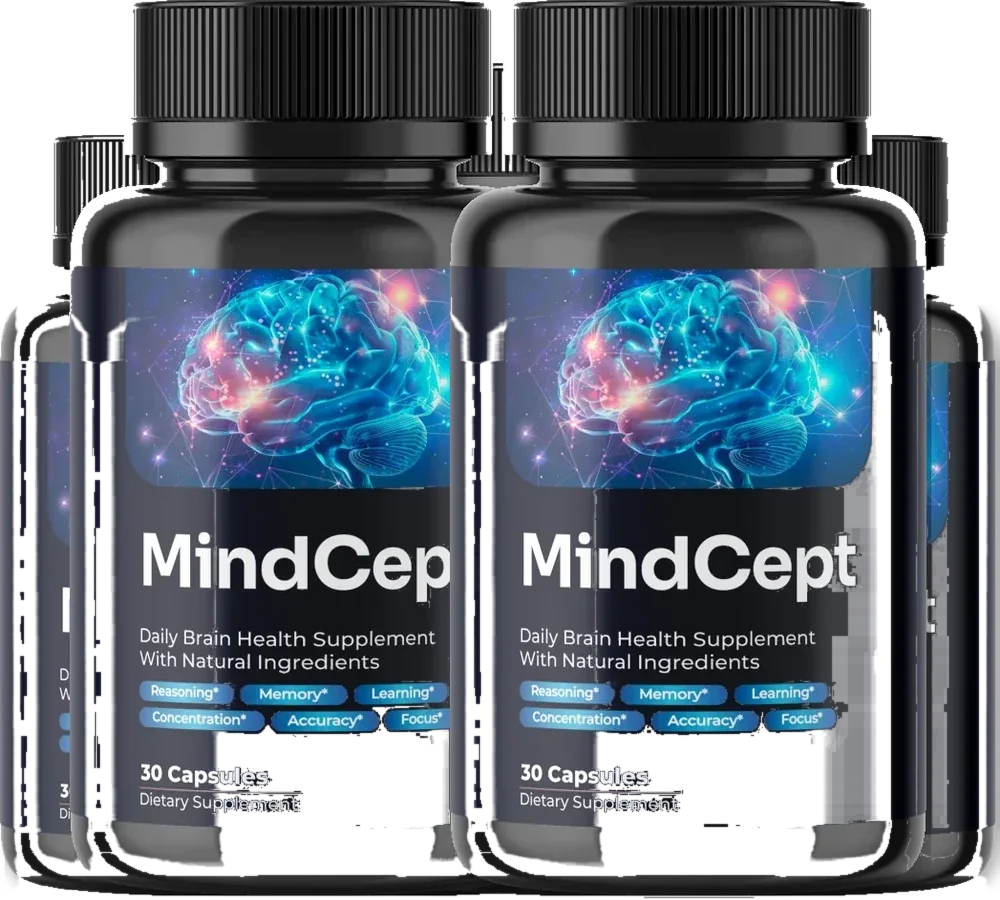
See how Mindcept puts this together
Bacopa, L-theanine, phosphatidylserine and three more nootropics in one daily capsule — with every ingredient and its evidence laid out.
Read the Mindcept Review