The Best Brain Supplement to Take: Change One Variable at a Time
Quick answer: how do you work out the best brain supplement to take?
Run it as an experiment with one variable. Start a single new product, keep sleep, caffeine and everything else as steady as you can, and give it a trial length set by its slowest ingredient rather than by your patience. Write down where you are starting from and the date you will decide, before the first capsule. Almost nobody does this, which is why almost nobody can say whether the last three things they bought did anything.
- One thing at a time: two new products at once teaches you nothing about either.
- Trial length: 8–12 weeks for slow botanicals, days for acute ingredients.
- Decide in advance: a written baseline, a decision date, and a stop rule.

Why adding three things at once destroys the answer
The usual pattern goes like this. Someone decides to sort out their focus, and the following Monday they begin a nootropic, a magnesium supplement, an omega-3, a new morning routine and a promise to go to bed earlier. Two weeks later they feel better and conclude the nootropic works.
They have no idea whether it works. Five variables changed simultaneously, and the sleep change alone could explain the entire result. If they had felt worse, they would have had five suspects and no way to identify which. And if a side effect had appeared, the only way to isolate it would have been to stop everything and start again — losing weeks.
This is not pedantry; it is the single reason most people cannot tell you whether anything in their cupboard is worth repurchasing. It is also why the question of the best brain supplement to take is usually answered badly — not because the information is unavailable, but because the test was never run cleanly enough to produce an answer. The fix costs nothing. Change one thing, hold the rest still, and you convert a vague impression into something you can act on.
Step 1: a baseline week, before you open the bottle
Spend seven days recording where you actually are. This feels like a delay and it is the highest-value week of the whole exercise, because without it you will later be comparing against your memory of how you felt — and memory of past mental states is unreliable, generally rosier or gloomier than the reality, and quietly biased towards justifying money already spent.
Keep it to thirty seconds a day. Rate three things out of ten at a consistent time: mental clarity, ability to hold attention on one task, and afternoon energy. Note hours slept and caffeine intake. Add one sentence about anything unusual — deadline, illness, argument, travel. Seven rows of that gives you a number to beat instead of a feeling to argue with.
While you are at it, note the two or three specific situations you actually care about. "Better focus" is unmeasurable. "Whether I lose the thread in the Thursday planning meeting" and "whether I still read a chapter at 9pm without rereading paragraphs" are testable.
Step 2: pick outcomes you can honestly judge
Two outcomes, no more. People who track eleven metrics abandon the log by week two, and people who track one often pick something too vague to move.
Good outcomes are frequent enough to occur several times a week, specific enough that you would recognise a change, and not entirely dependent on external circumstances. "How often I walk into a room and forget why" works. "Whether I had a productive week" does not, because a productive week is mostly a function of what was in the calendar.
Write both outcomes down and do not revise them mid-trial. Retrospectively deciding what counts as success is the most common way self-experiments fool the people running them — the goalposts drift towards whatever happened to improve.

Running the protocol on one product
The protocol works best with a single disclosed formula rather than a stack of four bottles. If you are choosing a best daily nootropic supplement to run it on, pick one that prints its amounts so you know what you are actually testing.
See the Official OfferStep 3: set the trial length from the ingredient, not from impatience
The most common reason people wrongly conclude a product did nothing is that they judged it far too early. The correct trial length depends entirely on what is in it, and the range is wide — hours for some ingredients, three months for others.
Bacopa monnieri is the clearest case. In the human trials, memory differences emerged after roughly 8 to 12 weeks of consistent daily use: the twelve-week randomised trial in 98 adults over 55 measured its outcome at week twelve, and the meta-analysis that pooled nine Bacopa trials included only studies dosing for twelve weeks or more. Judging Bacopa at two weeks is like judging a language course after two lessons. At the other end, L-theanine and caffeine act acutely; if they are going to change how an afternoon feels, they do it the same day, and no amount of persistence will convert a non-responder into a responder.
Multi-ingredient formulas take the length of their slowest component. If the fast-versus-slow distinction is new to you, our beginner’s guide to how nootropics work and how quickly sorts the categories before you set a date. If a capsule contains Bacopa alongside L-theanine, you may notice something on day one from the theanine and still need two months before the memory question can be answered honestly.
Fair trial length by ingredient type
| Ingredient | Typical daily amount studied | How the effect behaves | Minimum fair trial | What to judge it on |
|---|---|---|---|---|
| Bacopa monnieri | ~300 mg standardised extract | Cumulative, builds slowly | 8–12 weeks | Recall, holding a thread while reading |
| L-theanine | ~100–200 mg | Acute, same day | 3–5 separate days | Calm attention, jitteriness with coffee |
| Caffeine | Varies; check the label | Acute, tolerance builds | A few days | Alertness, and the effect on sleep |
| Phosphatidylserine | ~100–300 mg | Gradual | 6–12 weeks | Everyday memory complaints |
| Rhodiola rosea | ~200–400 mg standardised | Days to weeks; evidence modest | 2–4 weeks | Mental fatigue during demanding periods |
| Omega-3 (EPA/DHA) | ~1–2 g combined | Slow, tissue levels change over months | 12 weeks or more | Broad wellbeing; cognition results are inconsistent |
Step 4: write the stop rule before you start
A stop rule is a sentence you write on day zero describing what would make you quit. Written in advance it is easy. Written in week six, when you have already paid and told a friend about it, it becomes negotiable.
Two kinds of stop rule are worth having. The safety one comes first: stop immediately and speak to a pharmacist or doctor for any new rash, palpitations, persistent headache, stomach pain, or sleep that gets worse rather than better. The efficacy one is the decision date: on this date, if neither of my two outcomes has moved against baseline, I stop.
Honour it. A trial that ends in "no effect" is a successful experiment, not a wasted one — it has removed a candidate and saved you the next twelve months of repurchasing. Over two or three clean trials this is how you narrow down the best brain supplement to take for your own purposes, one eliminated candidate at a time. The failure mode is not stopping too early; it is never deciding at all, which is how bathroom cabinets fill up.
The purpose of a fixed decision date is not discipline. It is to make the decision while you can still remember what you were hoping to change.
Telling a real change from a good week
Expectation is powerful, and there is nothing shameful about that — placebo responses are real, measurable and well documented in trials of this kind. It is exactly why blinded, placebo-controlled studies exist, and it is why an enthusiastic first week is the least informative data you will collect.
Three habits sharpen the signal. First, look for persistence: a change that holds across four to six weeks and survives a bad night's sleep is more convincing than three brilliant days. Second, watch for a dose-timing relationship — if an acute ingredient does something, it should do it in a consistent window after the capsule, not randomly. Third, if the product is fast-acting, consider stopping for a week mid-trial and seeing whether the effect goes away. Withdrawal of a real effect is usually more noticeable than its arrival.
Be equally sceptical in the other direction. A dreadful fortnight during a work crisis does not prove a supplement failed; it proves you had a dreadful fortnight. That is exactly what the baseline log and the note about unusual events are for.
The same scepticism belongs on other people's results. Somebody else's enthusiastic first week is their unblinded anecdote, collected without a baseline, and it tells you less than your own log will after a fortnight — the reasoning behind judging supplement feedback you have no way of verifying.

The confounders that ruin most self-experiments
Hold these as steady as ordinary life allows, and note them when you cannot.
- Sleep. The largest influence on next-day cognition by a wide margin. A trial run across a period of disrupted sleep will tell you about the sleep, not the supplement.
- Caffeine. Changing your coffee habit mid-trial changes the outcome you are measuring. Keep it constant, and if the product itself contains caffeine, account for it.
- Alcohol. Affects sleep architecture and next-day clarity, often without feeling like it did.
- Workload and season. A quiet August and a chaotic November are not comparable environments.
- Other supplements. Adding or dropping anything else mid-trial reintroduces the multi-variable problem you were avoiding.
- Consistency of dosing. Cumulative ingredients need daily use; a trial with a dozen missed days has not really been run.
What to log, and how little it takes
Thirty seconds a day is enough. Date, whether you took it, hours slept, caffeine, your two outcome ratings out of ten, and a short note if something unusual happened. A phone note or the back page of a diary is fine; there is no benefit to an elaborate spreadsheet, and elaborate systems get abandoned.
At the decision date, do the comparison properly. Average your baseline week's ratings and average the last two weeks of the trial. Read your notes for confounders. Then answer one question in writing: would I buy this again, and why? If you cannot articulate the benefit in a sentence, you have your answer. This is also the method that turns the vague question of the best brain supplement for memory and focus into something you can settle for yourself rather than outsource to a stranger's ranking.
If you want to see what a formula looks like when the amounts are printed rather than blended away, our breakdown of the Mindcept ingredient panel lays it out, and if you are running this protocol for an older parent, the buyer's checklist for seniors adds the medication-interaction step that matters most in later life. One group this protocol is not for is under-18s: as our guide to adolescent caffeine limits and adult-formula safety explains, there is no adolescent dosing evidence to design a trial around.
What this protocol cannot do
An honest account of the limits, because a tidy method can create false confidence.
A single-person trial is not a study. You have no control group, no blinding and a sample size of one, so the result tells you what happened to you during those weeks — not what the ingredient does on average, and not what will happen next year. That is genuinely useful for a purchasing decision and worthless as evidence about the ingredient itself.
The protocol also cannot rescue a weak ingredient or an underdosed formula. If a product contains a fraction of the studied amount, running a perfect twelve-week trial on it produces a well-documented null result. Check the label before the calendar — a disclosed panel is the precondition for the whole exercise. And where the underlying evidence is thin, as it is for several popular botanicals, a personal trial cannot make it thicker.
Most importantly, none of this addresses disease. Supplements are not permitted to claim they diagnose, treat, cure or prevent any condition, and a self-experiment is not a substitute for assessment. Persistent memory problems, confusion, marked personality change or attention difficulties that disrupt daily life are reasons to see a doctor. Running a twelve-week home trial while those symptoms progress is the one version of this protocol that does real harm.
Medical note: this article is general information, not medical advice. Speak to a healthcare professional before starting any supplement, especially if you are pregnant, nursing, taking medication or managing a health condition.
Frequently asked questions
How long should you try a brain supplement before deciding if it works?
Set the length from the slowest ingredient in the formula, not from your patience. Bacopa monnieri needed roughly 8 to 12 weeks of daily use in trials before memory differences appeared, so a formula built around it deserves at least eight weeks. Fast-acting ingredients such as L-theanine or caffeine can be judged within days, because their effects are acute rather than cumulative.
Can you start two brain supplements at the same time?
You can, but you will not learn anything from it. If you add two products at once and feel better, you cannot tell which one did it, whether both were needed, or whether either was. Worse, if a side effect appears you have two suspects and no way to identify the culprit without stopping both. Add one thing, hold everything else steady, then decide.
How do you tell a real effect from a placebo or just a good week?
Compare against a written baseline rather than against memory, because memory of how you felt last month is unreliable and biased towards justifying the purchase. Record a week of specific ratings before you start, keep a short daily log during the trial, and look for a change that persists across several weeks and survives a bad night's sleep. A single excellent day proves nothing.
When should you stop taking a brain supplement?
Stop immediately for any new rash, palpitations, stomach pain, headaches that persist, or sleep that gets worse rather than better, and speak to a pharmacist or doctor. Otherwise stop at your planned decision date if nothing measurable has changed. A negative result is a successful experiment, and continuing out of habit is how people end up paying for a product they cannot describe the benefit of.
Scientific references
- Kongkeaw C. et al. — Meta-analysis of Bacopa monnieri trials, including time to effect (2014)
- NIH NCCIH — Dietary and herbal supplements: what the research shows
- NIH Office of Dietary Supplements — Using dietary supplements safely
- Harvard Health Publishing — The power of the placebo effect
- Mayo Clinic — Sleep and its effect on daytime function
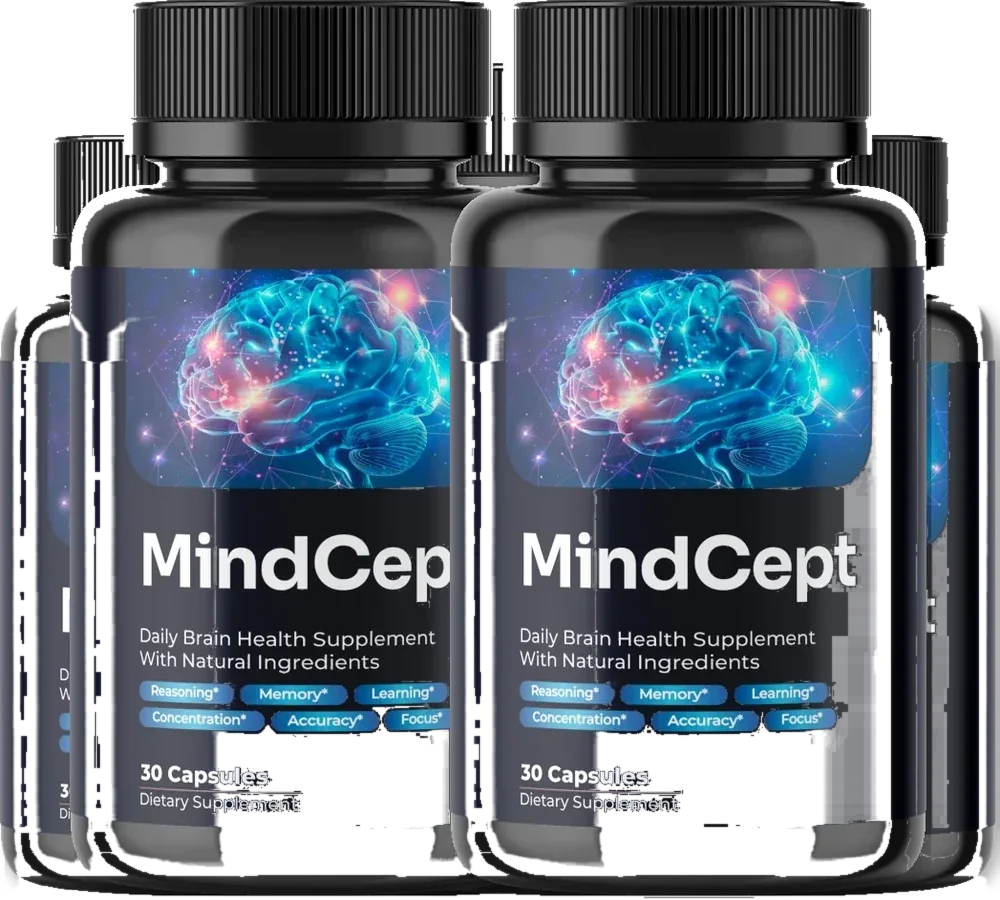
Give the protocol a single, disclosed variable
Six nootropic ingredients, amounts printed, one capsule a day — a formula you can actually test rather than guess at. Ordering direct also answers the where to buy brain supplements question cleanly: current label, traceable lot, one guarantee.
Check the Official Store