Best Brain Supplement Ingredients: How to Read the Facts Panel
Quick answer: how do you judge the best brain supplement ingredients from a label?
Read the supplement facts panel from the top down and in order: serving size first, because it rescales every number underneath it; then the amount per serving for each named ingredient; then the extract ratio or standardisation that tells you what kind of ingredient it actually is. A formula that survives those three lines can be compared against published research. One that hides its amounts inside a proprietary blend cannot be compared against anything.
- Read first: serving size — is that dose one capsule or four?
- Read next: milligrams per ingredient, not a single blend total.
- Then check: standardisation, for example "50% bacosides", not just the plant name.
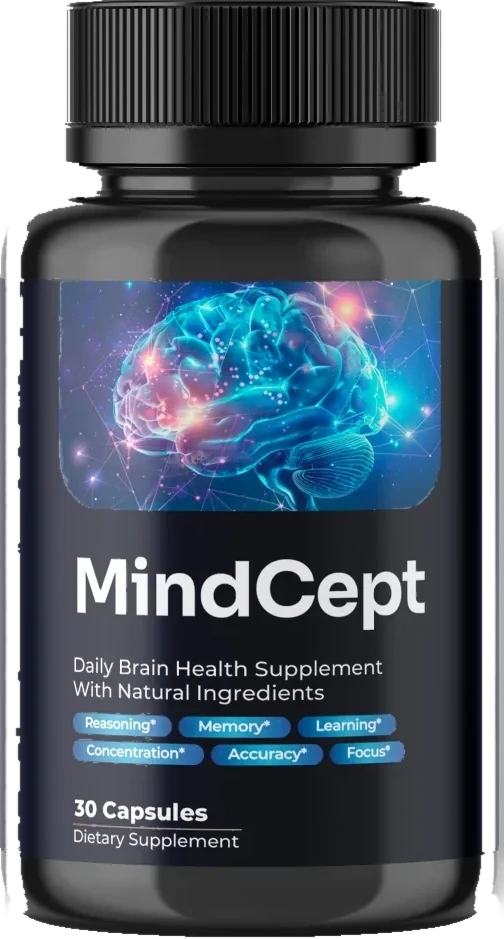
The front of the box is marketing; the panel is the contract
Front-of-pack wording is governed loosely and written by copywriters. "Clinically studied ingredients" can mean one ingredient was studied somewhere, at a dose the product does not use. "Advanced", "premium" and "maximum strength" have no regulatory definition at all. None of that is illegal; it is simply not information.
The supplement facts panel is different. It follows a prescribed format, and every number on it is a statement the manufacturer is accountable for. Learning to read it takes about ten minutes and it changes how the entire category looks — two products that appear identical from the front frequently turn out to differ by an order of magnitude on the back. This is the single skill that lets you evaluate the best brain supplement ingredients for yourself instead of taking someone's word for it.
One framing point before the walkthrough. In the United States, dietary supplements are not approved by the FDA before sale. Manufacturers are responsible for the accuracy of their own labels and for the safety of what is inside. That places real weight on the panel: it is both the most regulated part of the packaging and the part almost nobody reads.
Line 1: serving size, and why it rescales everything
Serving size sits at the top for a reason. Every amount printed below it applies to that serving, not to one capsule. A panel listing 300 mg of Bacopa monnieri looks the same whether the serving is one capsule or four — but in the second case each capsule holds 75 mg, and you have to swallow four to reach the number that impressed you.
Serving size also determines what the bottle really costs you in time. Sixty capsules is a two-month supply at one a day and a fifteen-day supply at four. Products with large multi-capsule servings are not automatically worse; some genuinely need the volume to fit meaningful doses of bulky ingredients. But you cannot compare two products, or work out how long a bottle lasts, until you have normalised both to the same serving. Do that arithmetic first and half the confusion in this category disappears.
Underneath serving size you will usually find "servings per container". Multiply it out. A generous-sounding bottle with 30 servings of four capsules is a one-month supply, and a modest-sounding bottle of 60 single-capsule servings is two.
Line 2: amount per serving, and the proprietary blend problem
This is the column that decides whether a product can be evaluated at all. Each active ingredient should have its own figure in milligrams or micrograms. When it does, you can put that number next to the doses used in human trials and form a view. The Bacopa memory literature is the clearest worked example: the 2014 meta-analysis of randomised Bacopa monnieri trials in the Journal of Ethnopharmacology pooled studies of standardised extract, so a panel that prints its Bacopa amount can be held against that body of work and a blend total cannot.
The alternative is the proprietary blend: a single combined weight covering several ingredients, listed in descending order by quantity. Say a "Focus & Memory Complex" totals 500 mg across seven ingredients. That is legal and common, and it is also almost uninterpretable. The first ingredient could account for 450 mg of the 500, leaving the remaining six to share 50 mg between them — enough to print their names on the label, not enough to matter. Brands defend blends as protecting a formula from being copied. In practice, competitors can reverse-engineer a product in a laboratory; only the customer is kept in the dark. The best-known example of the format is Onnit’s Flow, Focus and Fuel blends, and our breakdown of the Alpha Brain label and its one published trial shows exactly what a blend costs you when you try to compare it with anything.
You do not need to boycott every blend. You do need to treat a blend as an unknown, and to prefer, all else equal, the brand willing to print its own numbers. The brands that disclose tend to disclose because their numbers hold up.
Practise on a panel that discloses its amounts
Reading labels gets easier with a good example in front of you. If you are comparing what claims to be the best brain supplement on the market, start with one that prints a figure beside every ingredient rather than a blend total.
See the Official OfferLine 3: % Daily Value, and why most brain ingredients show an asterisk
The third column carries percent Daily Value, a reference figure set for nutrients with established intake recommendations — vitamins and minerals, mostly. If a panel lists vitamin B12, B6, folate or magnesium, you will see a percentage telling you how that serving compares to the general adult reference intake. Vitamin-led brain formulas lean hard on that column, which is why our comparison of the FocusFactor panel with a botanical formula spends most of its time separating impressive-looking percentages from disclosed botanical doses.
Beside Bacopa, ginkgo, L-theanine, rhodiola or lion's mane you will instead see a dagger or an asterisk with the footnote "Daily Value not established". That is not a warning; it simply means no official reference intake exists for that substance, which is true of most botanicals. The practical consequence is that the panel gives you no yardstick for those ingredients, so the yardstick has to come from the research literature instead. That is why knowing the studied ranges matters, and why the table further down this page is worth more than any percentage would be.
Watch the very high percentages too. A B-vitamin at several thousand percent of the daily value is not automatically better; for water-soluble vitamins the surplus is largely excreted, and for a few nutrients there are upper limits worth respecting. Big percentages photograph well. They are not evidence of a better formula.
Line 4: extract ratios and standardisation
Botanicals are where labels get genuinely technical, and where two products with identical milligram figures can be completely different things.
An extract ratio such as 10:1 or 20:1 describes concentration: twenty parts raw plant reduced to one part extract. It tells you the material was concentrated. It does not tell you which compounds survived, and it is easy to game with an aggressive solvent that concentrates the wrong fraction.
Standardisation is the more useful statement. "Standardised to 50% bacosides" or "24% flavone glycosides and 6% terpene lactones" commits the manufacturer to a consistent concentration of the compounds the research actually measured. When a label names both — the plant part, the ratio and the marker percentage — you are looking at a company that knows what the trials used. When it names only "Ginkgo biloba 120 mg", you know the weight and nothing else.
Also read the plant part. Ginkgo research is on leaf extract. Bacopa research is on the whole plant or aerial parts. A label naming a different part than the studies used is describing a different ingredient wearing a familiar name.
Common label wording, translated
| Ingredient | How labels often word it | What that actually tells you | Form and amount used in human studies |
|---|---|---|---|
| Bacopa monnieri | "Bacopa monnieri (whole plant) 300 mg" | Weight only — no potency commitment | Standardised extract, around 300 mg daily, judged after 8–12 weeks |
| Bacopa monnieri | "Standardised to 50% bacosides" | Named marker compound — comparable to trials | Same, and now you can check it against them |
| Ginkgo biloba | "Ginkgo 24/6 leaf extract" | 24% flavone glycosides, 6% terpene lactones | Standardised leaf extract, roughly 120–240 mg daily |
| L-theanine | "L-theanine 100 mg" | A defined amino acid — weight is enough | Around 100–200 mg, effects felt within hours |
| Lion's mane | "Mushroom 500 mg (10:1 extract)" | Concentrated, but fruiting body or mycelium? | Roughly 1–3 g daily in small human studies |
| Any blend | "Cognitive Matrix 500 mg" | Combined weight, descending order, no detail | Cannot be compared to any published dose |
A supplement label is the only part of the marketing that has to be true in numbers. Everything else is an adjective.

Line 5: the "other ingredients" list
Below the panel, in smaller type, sits everything that is not an active: capsule material, flow agents, fillers, anti-caking compounds, colours. People skip it, and it answers three questions worth asking.
First, capsule material. "Gelatin" means an animal-derived shell; "hypromellose" or "vegetable cellulose" means a vegetarian one. Second, allergens and additives — soy lecithin, wheat-derived ingredients, titanium dioxide, artificial colours and added sugars all get declared here, and major allergens must be identified. Third, crowding. A short list of one or two excipients in a capsule of finite volume leaves more room for actives than a list of eight. Some excipients are genuinely necessary for manufacturing; a long list in a small capsule is still a signal about priorities.
Line 6: the statements around the panel
The remaining text on the back does real work. A lot number and expiry date should be printed or stamped — without a lot number, no certificate of analysis can be traced to your bottle. A facility statement such as "manufactured in a GMP-certified facility" describes process controls, not testing of the finished product, and is not the same as a USP or NSF verification mark. And the FDA disclaimer — that the statements have not been evaluated by the Food and Drug Administration and the product is not intended to diagnose, treat, cure or prevent any disease — is required whenever a structure-function claim appears. Its presence is normal. Its absence, alongside a claim about a disease, is a reason to walk away.
Storage instructions matter more than they look. Fish oils and some botanical extracts degrade with heat and light, and a bathroom cabinet is the worst storage location in most homes.
Reading two labels side by side in ninety seconds
Here is the whole method compressed. Normalise both products to a single day: multiply the per-serving amounts by servings per day. Circle every ingredient with a disclosed amount and cross out every blend. For each surviving ingredient, compare the daily amount against the studied range. Note which products name standardisation. Then count how many ingredients on each label clear the bar — that number, not the total ingredient count, is the fair comparison.
A formula with five well-dosed, standardised ingredients beats one advertising twenty-six ingredients at fairy-dust amounts, every time. That is the whole reason the best brain supplement ingredients are the ones you can see clearly, not the ones with the longest names. Long ingredient lists photograph well on a sales page and are the single most common way a mediocre product looks impressive. If you want to see the method applied end to end, our breakdown of what is inside Mindcept walks through the same panel line by line, and our piece on the evidence behind Bacopa, ginkgo and L-theanine gives you the research side of the comparison.
What a facts panel cannot tell you
The panel is the best tool available to a buyer, and it is still limited. It tells you what the manufacturer says is in the bottle; it is not itself a test result. That gap is not theoretical: an analysis in JAMA Network Open of the FDA’s tainted-products database identified 776 dietary supplements between 2007 and 2016 that were found to contain undeclared, unapproved pharmaceutical ingredients, most of them sold for sexual enhancement, weight loss or muscle building rather than for memory. Only independent verification — a USP Verified mark or an NSF mark, or a published certificate of analysis matched to your lot number — confirms that the contents match the claim.
It cannot tell you whether the finished combination works. Ingredients can each have published research while the specific multi-ingredient product has never been trialled as sold. It cannot tell you about bioavailability, which depends on form, food, and your own physiology. It cannot predict interactions with your medications — that requires a pharmacist and your actual medication list. Nor does a good panel tell you anything about the shop: a well-disclosed label can sit on a store that will not answer an email, which is a separate check covered in our guide to verifying a supplement's official website and support contact before you buy. And it cannot compensate for weak evidence: a perfectly disclosed, generously dosed ingredient with thin human data is still an ingredient with thin human data, and several popular brain ingredients are exactly that. Reading the panel makes you a better buyer. It does not make a modest ingredient a strong one, and even the best brain supplement ingredients have ceilings the label will never mention.
Medical note: this article is general information, not medical advice. Speak to a healthcare professional before starting any supplement, especially if you are pregnant, nursing, taking medication or managing a health condition.
Frequently asked questions
What is the most important line on a supplement facts panel?
Serving size, because it rescales everything below it. A panel showing 300 mg of Bacopa per serving means something very different when the serving is one capsule than when it is four, and a bottle of 60 capsules lasts two months at one a day or fifteen days at four. Read serving size first, then read the amounts.
What does a 20:1 extract ratio mean on a brain supplement label?
It means twenty parts of raw plant material were used to produce one part of finished extract, so 100 mg of a 20:1 extract is described as equivalent to 2,000 mg of raw herb. Ratios say nothing about which compounds survived the process, so a named standardisation such as a percentage of bacosides or flavone glycosides is more informative than the ratio alone.
Is a proprietary blend on a brain supplement a red flag?
It is a transparency problem rather than a safety problem. A blend gives one combined weight for several ingredients listed in descending order, so the first ingredient could account for almost the entire total and the last few could be present in trace amounts. You cannot compare the product against published research or against a competitor without individual amounts.
Do the other ingredients on a supplement label matter?
Yes, for three reasons. It is where capsule material appears, so vegetarians and vegans learn whether the shell is gelatin or cellulose. It is where allergens and additives such as soy lecithin, titanium dioxide or artificial colours are declared. And a very long list of flow agents and fillers in a small capsule leaves less room for the actives you are paying for.
Scientific references
- NIH Office of Dietary Supplements — Dietary supplements: what you need to know
- NIH NCCIH — Dietary and herbal supplements
- Kongkeaw C. et al. — Meta-analysis of Bacopa monnieri trials and standardised extract dosing (2014)
- Mayo Clinic — Supplements: reading the label before you buy
- NIH NCCIH — Using dietary supplements wisely: labels, doses and safety
Now read the Mindcept panel yourself
Six disclosed nootropic ingredients, standardisations named, one capsule per serving — the sort of label that makes a nootropic supplement brand easy to evaluate rather than easy to admire. Buying direct also settles the where to buy brain supplements question: current label, traceable lot, one guarantee.
Check the Official Store